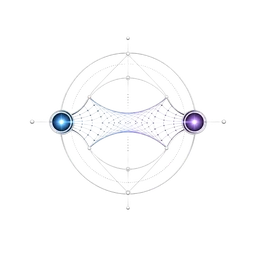
Phase 25 · mechanism or artefact?
Why this almost worked — and why we rejected it
AT-0323 → AT-0330. A nonlinear-plus-mediator search produced the best headline numbers this project has ever generated. Every control we then ran reproduced them without the mechanism. This page is the falsification, kept permanently.
Current result, stated plainly
REJECTED — DAMPING-DOMINATED. THE PROTECTION CAME FROM STRONG IDENTITY DAMPING, NOT FROM THE PROPOSED NONLINEAR OR MEDIATOR MECHANISM.
We found something that looked like it worked. The object arrived where we sent it, and it barely changed on the way. Then we took our clever idea out of the model and ran it again — and it worked just as well without the idea. That means the idea was never doing the work. Strong damping was. We are recording the near-miss rather than hiding it, because a result that survives only until you test it is not a result.
Lawful substantial change in genuine relational location without destructive traversal, under narrow identity tolerance, invariant preservation, bounded local propagation, pathwise reachability, near-zero complete-state debt, finite action, robustness, transfer without retuning and nontriviality.
Rejected near-hit, recorded permanently. A nonlinear-plus-mediator search returned a candidate with address error below 0.1 per cent, final identity drift near 0.03 and mediator residue near 0.005 — by every headline number the best result this project has produced. Control ablation then showed nearly identical performance for the matched linear model and for the same system with the mediator removed. The protection was dominated by strong identity damping, not by the proposed nonlinear or mediator mechanism. Classification: REJECTED — DAMPING-DOMINATED.
This phase audits the candidate produced under DOES THE SYSTEM HEAL ITSELF? and the nonlinear frontier. Every blocker in the blocker ledger still stands.
Controls
Lowering the coupling floor or raising the damping ceiling makes protection easy and meaningless. AT-0326 exists to keep that boundary explicit rather than convenient.
Running the ablation matrix and trivial controls…
Research progress · evidence ladder
Where this work actually stands
Each rung means something different, and a result on one rung never counts as a result on the next. We are on rung three, working. Rungs five and six are empty and we do not pretend otherwise.
- 01Mathematical propertyreached
A statement that follows from the definitions we chose, provable or verifiable by construction.
Gain bound Γ_A ≤ 1 for L1 edge-weight perturbation; invariant-preserving displacement in the 24-D benchmark.
- 02Computational resultreached
A number produced by a specific seeded model run. Reproducible, but only about the model.
AT-0059 → AT-0071: manifold sampling, connectivity, corridor width, detour ratio, action minimisation.
- 03Robust toy-model phenomenonwe are here
A result that survives seed changes, noise, topology changes, countermodels and coarse-graining.
Partially reached: some findings persist across scales and seeds, others are flagged FRAGILE by the gate.
- 04Candidate theoretical principlenot reached
A rule general enough to state without reference to our particular graph, with derived consequences.
No candidate rule has yet survived every countermodel and scale test simultaneously.
- 05Physical predictionnot reached
A quantitative, falsifiable statement about a measurable physical quantity, with an error budget.
None. Graph observables are not mapped to any measurable physical quantity.
- 06Experimental evidencenot reached
Independent measurement agreeing with a prediction that alternatives do not make.
None, and deliberately far away.