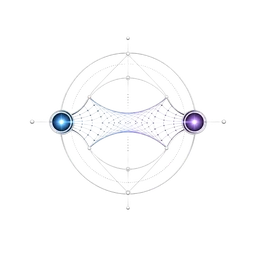
Phase 55 · phase-selective causality · AT-0479 → AT-0492
We were failing our own contradiction
Seed 479. For five phases we demanded an operational shortcut that also sends no signal. That gate cannot be satisfied by anything: if a distinguishable state arrives early, repetition turns it into bits, and if nothing distinguishable arrives, nothing was transported. So we retired it and replaced it with phase-selective causality — the ordinary phase must be exactly local, the anomalous phase may lawfully carry a different cone while it exists, restoration must return the ordinary phase, and the audit hunts paradoxes rather than speed. Then we built the strongest toy the corrected gate allows, and charged it in full.
Plain language
Loading.
Headline readings
Time ratio
…
Cost ratio
…
Verdict
…
Physical evidence
NONE
The mistake we fixed · transport implies signalling
Retired gate
“An operational shortcut that sends no signal during the anomalous transition.”
Unsatisfiable. If two distinguishable preparations at A produce outputs at B that differ at all, a bit crossed. If they do not differ at all, nothing crossed. There is no third case, so every phase that failed on this gate failed on a contradiction of ours, not on a property of the world.
Replacement gate
Phase-selective causality.
The ordinary phase C₀ must be exactly X-local. The anomalous phase C* may lawfully carry a different operational causal cone while it exists. Restoration must bring C₀ back. The audit then asks about closed causal loops and consistency — not about preserving the old cone during C*.
Discrimination scaling. One use of a channel with remote distinguishability δ leaves an error of (1 − δ)/2. Repeating m times drives it below exp(−mδ²/2), so about 1/δ² uses buy a reliable bit — a finite number that does not grow with N, against an ordinary route costing Θ(N) per bit.
δ = 0 is the only safe value, and δ = 0 means no identity and no information moved. A genuine operational shortcut therefore creates a new causal relation during the event. That is not a loophole; it is what transport means.
The replacement taxonomy · five stages
Pre-registered failure conditions
One universe, two causal phases
The substrate never changes: a Hamiltonian cycle of ordinary access edges plus a generic matching of latent relational edges, maximum degree three. In C₀ only the cycle carries influence and the cone from A creeps one site per tick. After a local trigger the order field c sweeps the substrate, and where c = 1 on both ends of an edge that edge becomes an accessible interaction — so the cone from A follows the substrate instead. Nothing crosses a latent edge before the trigger fires.
Phase in force
C* — anomalous
substrate cone once c = 1 on both ends
Ordinary time A → B
32 ticks
C* end to end
17 ticks
nucleate 6 · arrive 11 · restore 6
Action bill
128 order-variable flips to open and close the phase, against 32 ordinary hops. The time ratio grows with N. The cost ratio does not.
The local two-phase rule
Controls (a) → (j)
Gate sheet
Verdict
Taxonomy · NO CRACK / MATHEMATICAL TWO-PHASE CRACK / CAUSAL-PHASE TRANSITION CANDIDATE / PHYSICAL ANALOGUE CANDIDATE
Blockers raised